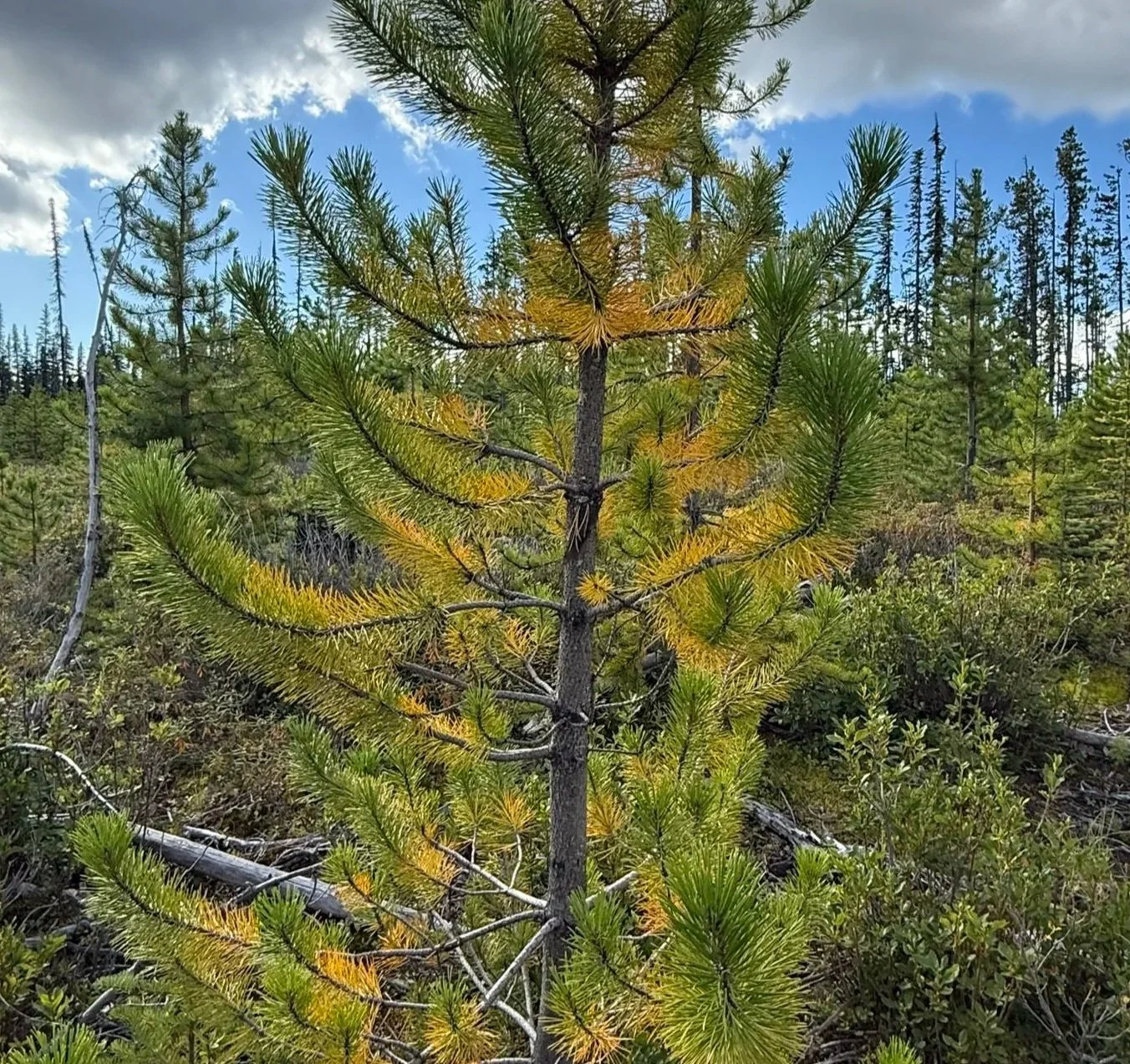
Forest Health
A healthy woodlot is better able to withstand insects, disease, drought, wildfire, storms, and other disturbances. Forest health does not mean that every tree must be free of damage or that all dead trees should be removed. Some dead and declining trees provide important wildlife habitat and nutrients. The goal is to understand what is happening, protect important forest values, and respond where action will improve the long-term condition of the woodlot.
Private woodlot owners can support forest health by:
Walking the property regularly and watching for unusual changes in tree colour, foliage, growth, bark, roots, or crown condition
Learning to recognize common insects, diseases, invasive species, drought stress, and physical damage in the local area
Recording the location, extent, and progression of problems with notes, photographs, or maps
Maintaining a mix of healthy species, ages, sizes, and stand conditions
Protecting soil, water, wetlands, and riparian areas
Reducing unnecessary damage during harvesting, thinning, road construction, and equipment use
Removing or treating affected trees only when it is appropriate and will reduce risk or improve stand condition
Managing hazardous fuel near homes, buildings, roads, and other important infrastructure
Supporting beneficial insects, birds, and other wildlife through habitat diversity
Controlling invasive species before they become established or spread
Monitoring areas after treatment to determine whether the response was effective
Integrated Forest Health Management
An integrated approach begins with accurate identification and considers prevention, monitoring, cultural and mechanical treatments, biological controls, and chemical treatments where appropriate and permitted. Before cutting or treating a tree, confirm the likely cause of the problem whenever possible. Similar symptoms can result from insects, disease, drought, root damage, soil compaction, wildfire, or natural aging, and an incorrect diagnosis can make the problem worse.
Not every affected tree needs to be removed. Retain suitable snags, cavity trees, and downed wood where they do not create an unacceptable safety, wildfire, access, or pest risk. Larger infestations, unusual mortality, suspected regulated pests, or problems affecting neighbouring properties should be assessed with help from a qualified forestry professional or Alberta’s current forest-health resources. Alberta provides information on forest pests, diseases, invasive species, and forest-health monitoring, while the Canadian Forest Service provides additional identification and forest-health resources.
A simple forest-health record can include the date, location, tree species, symptoms observed, photographs, weather conditions, action taken, and follow-up results. Keeping these records can help identify recurring problems, evaluate treatments, and make better management decisions over time.